
What Happens in a Drama Class? A Parent's Guide

For many parents, enrolling a child in drama classes is unfamiliar territory.
Unlike sports or music lessons, it is not always obvious what happens during a typical class. Parents often wonder whether lessons are simply games, rehearsals for performances or opportunities for children to act in front of others.
The reality is quite different.
A well-structured dramatic arts programme is designed to develop communication, creativity and practical life skills through carefully planned learning experiences. Every activity has a purpose, and every lesson builds upon previous learning.
At Praxis, our classes are not built around entertainment alone. They are structured educational sessions that help learners develop progressively, preparing them for authentic communication and performance opportunities while building skills that extend well beyond the stage.
Every Lesson Has a Purpose
Children learn most effectively when lessons follow a clear structure rather than relying on random activities.
Each class is designed around specific learning outcomes, allowing learners to develop one skill before progressing to the next. This approach creates consistency and helps children recognise their own progress over time.
Rather than asking learners to simply perform, we first teach the underlying skills that make confident performance possible.
Communication.
Voice.
Movement.
Observation.
Creativity.
Interpretation.
Collaboration.
These skills become the foundation upon which future learning is built.
A Typical Drama Lesson
Although every lesson differs depending on the learning objectives, a structured class often follows a consistent progression.
The lesson begins by helping learners focus and prepare for the session ahead.
Warm-up activities develop concentration, vocal control, posture, movement and awareness.
Once learners are engaged, the lesson introduces a new concept or skill. This may involve voice projection, storytelling, character development, expressive movement or effective communication.
Learners then apply the new skill through carefully designed practical activities. These exercises encourage participation while allowing the teacher to provide guidance and constructive feedback throughout the learning process.
The lesson concludes with reflection, allowing learners to recognise what they have learned, what improved and what they will continue developing during future lessons.
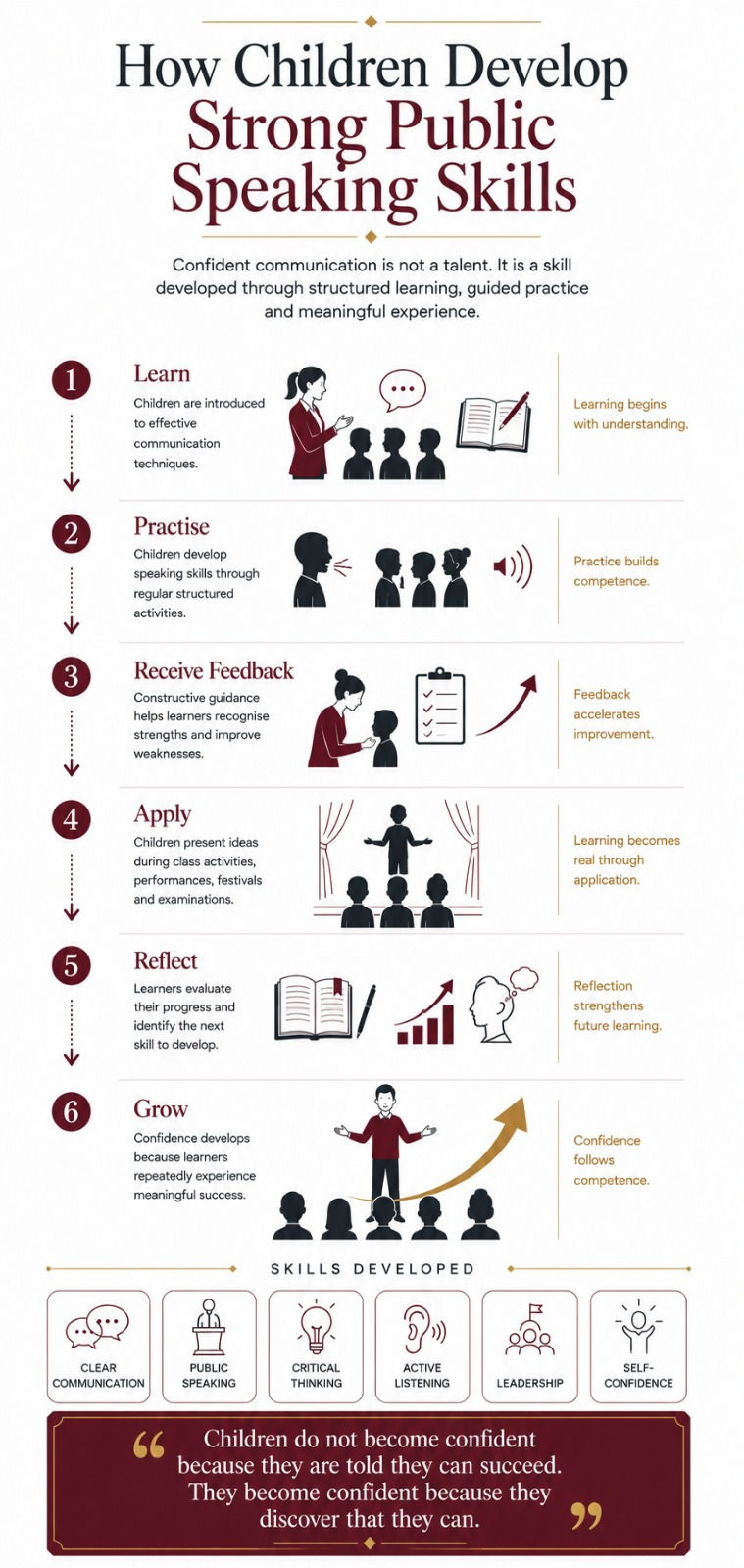
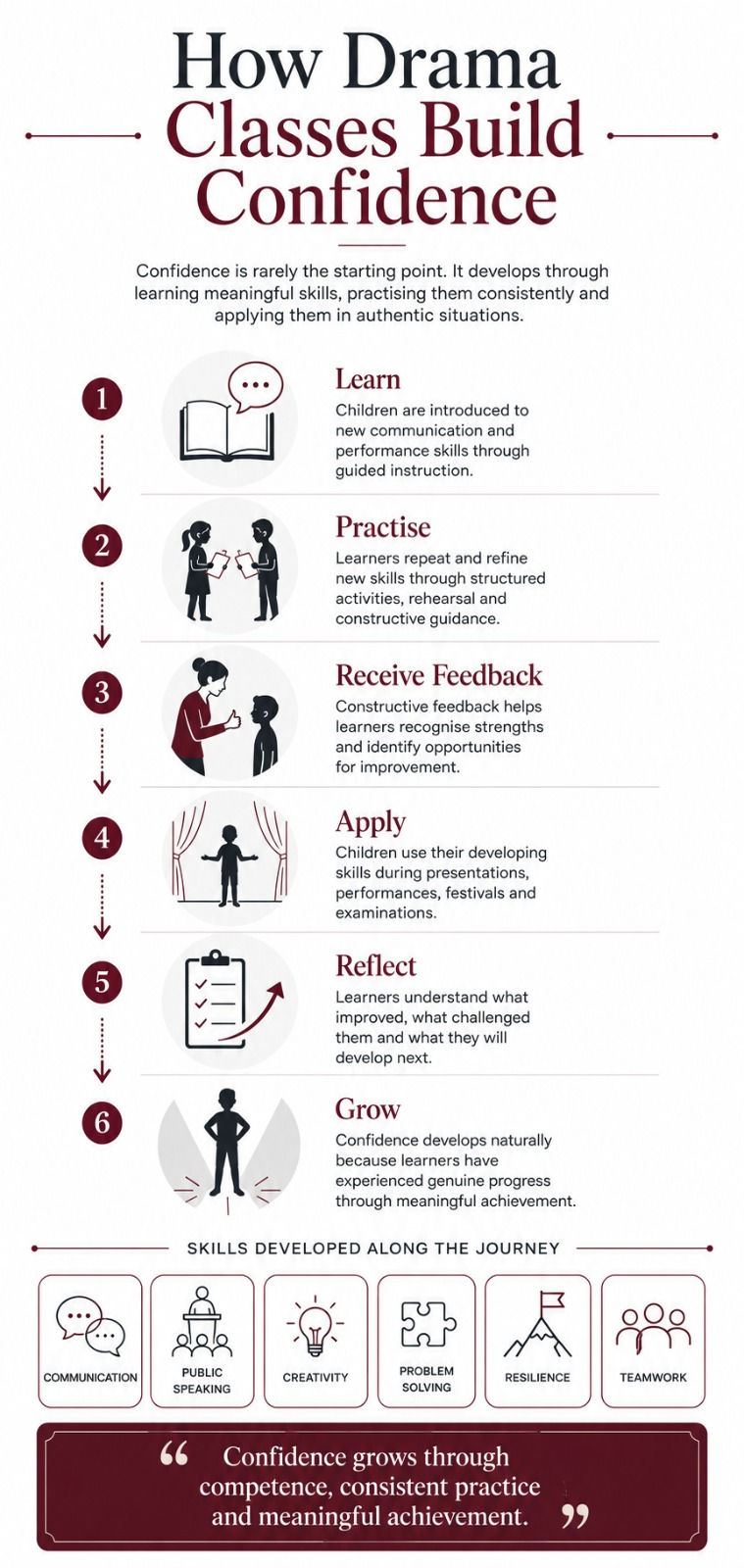
This cycle of learning, practice, feedback and reflection allows meaningful progress to develop consistently over time.

Learning Through Practice
Children rarely master new skills by listening alone.
They improve by applying what they have learned repeatedly.
At Praxis Academy, practical participation forms an essential part of every lesson.
Learners work individually, in pairs and in groups depending on the objectives of the session.
Each activity is designed to strengthen both technical performance skills and transferable life skills.
Children gradually become more comfortable communicating with others because communication becomes something they practise every week.
Confidence develops naturally because learners repeatedly experience success through guided learning rather than being expected to perform perfectly from the beginning.
Constructive Feedback Supports Growth
Feedback is one of the most valuable parts of learning.
Rather than focusing only on what went well, constructive feedback helps learners understand where they can continue improving.
At Praxis Dramatic Arts Academy, feedback is intended to encourage growth rather than discourage participation. Learners develop by recognising strengths, identifying areas for improvement and applying that knowledge during future lessons.
This approach helps children become more resilient learners who understand that mistakes are an expected and valuable part of developing new skills.
Preparing Children for Authentic Experiences
Learning inside the classroom is only part of the journey.
As learners develop, they are gradually introduced to opportunities where they can apply their skills in authentic settings.
These may include performances, festivals, examinations or other structured presentation opportunities.
Rather than viewing these experiences as separate from learning, Praxis Academy treats them as an extension of the educational process. They allow learners to demonstrate what they have learned while continuing to grow through real-world experience.
More Than Performance
Parents sometimes assume that success in drama is measured by how well a child performs on stage.
In reality, many of the most valuable outcomes occur long before a performance begins.
Children become more confident speaking in class.
They learn to organise their thoughts before communicating.
They become better listeners.
They learn to collaborate respectfully with others.
They become more comfortable responding to unfamiliar situations.
These skills often support academic learning, future careers and everyday life just as much as they support dramatic performance.
What Parents Can Expect
Parents should expect their child to be challenged appropriately, encouraged consistently and supported throughout the learning process.
Progress does not happen overnight.
Every learner develops at a different pace.
Some children quickly enjoy performing before others.
Others require more time to build confidence.
Neither approach is better.
Our role as educators is to guide each learner from their current level towards their next stage of development through structured teaching, meaningful practice and constructive feedback.
Final Thoughts
A quality drama class is far more than an hour of acting.
It is a structured learning experience where children develop communication, creativity, confidence and resilience through progressive skill development.
At Praxis Dramatic Arts Academy, every lesson contributes towards a larger educational journey.
Children do not simply attend classes to prepare for a performance.
They develop skills that prepare them for presentations, interviews, leadership opportunities and many of the communication challenges they will encounter throughout life.
That is why dramatic arts is not simply about performing.
It is about learning to communicate with confidence, think creatively and continue growing through meaningful experience.
Frequently Asked Questions
Do children perform in every lesson?
No. Performance activities are balanced with skill development, guided practice and constructive feedback.
Are drama classes suitable for beginners?
Yes. Structured programmes are designed to develop learners progressively regardless of previous experience.
What should my child bring to class?
Comfortable clothing that allows freedom of movement and a willingness to participate and learn.
Are performances compulsory?
Programmes differ. At Praxis Academy, performance opportunities form part of the educational journey and are introduced progressively as learners develop.
Sources and Further Reading
Self-Efficacy: The Exercise of Control
Self-efficacy: Toward a Unifying Theory of Behavioral Change
Continue Your Parent Resource Journey
Explore our other Parent Resources to learn how structured dramatic arts develops confidence, communication and lifelong skills through meaningful learning.
Ready to learn more about Praxis Academy? Visit our Programme page or contact us to discover how our structured dramatic arts training helps children develop skills that extend far beyond the stage.
Continue Reading
● Can Drama Classes Help a Shy Child?
● How Drama Classes Help Children Build Confidence, Communication and Life Skills
● How Parents Can Support Their Child's Confidence at Home
Comments