
The Benefits of Public Speaking for Children: A Skill That Lasts a Lifetime

Public speaking is often associated with politicians, teachers and business leaders.
In reality, it is a life skill that almost every child will use long before entering the workplace.
Answering questions in class.
Giving an oral presentation.
Participating in group discussions.
Introducing themselves to new people.
Interviewing for leadership positions.
Sharing ideas with confidence.
These everyday situations all require the ability to communicate clearly.
For many children, however, speaking in front of others can feel intimidating.
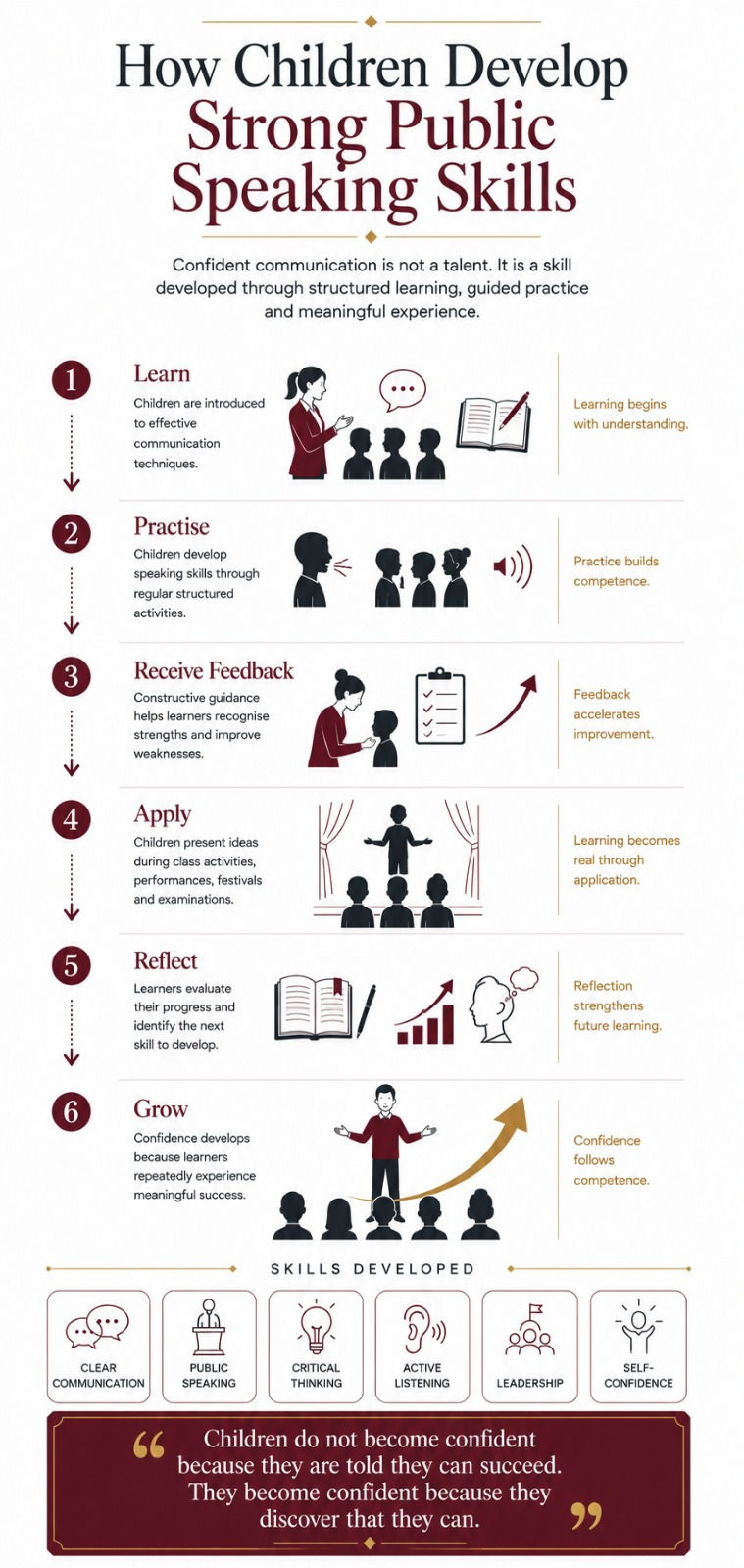
The good news is that public speaking is not an inborn talent reserved for a fortunate few. Like reading, swimming or playing an instrument, it is a skill that develops through structured learning, guided practice and meaningful experience.
At Praxis Academy, we view public speaking as one of the many practical outcomes of quality dramatic arts education. Our goal is not simply to help children perform on a stage. It is to help them communicate with confidence wherever life takes them.
Public Speaking Is a Skill, Not a Personality Trait
One of the most common misconceptions is that confident speakers are simply born that way.
While personality influences how children approach new situations, effective communication is learned.
Quiet children can become excellent speakers.
Outgoing children can still struggle to organise their thoughts clearly.
The difference often lies in opportunity, guidance and practice.
Children who regularly communicate in supportive environments gradually become more comfortable expressing themselves because they gain experience doing exactly that.
Confidence follows competence.
Why Public Speaking Matters Beyond School
Many parents think public speaking only becomes important during school presentations.
In reality, communication influences almost every aspect of life.
Children who learn to communicate effectively often find it easier to explain ideas, ask questions, participate in discussions and work collaboratively with others.
As they grow older, these same skills become valuable during interviews, leadership opportunities, university presentations and professional careers.
Public speaking is not simply about standing behind a podium.
It is about communicating ideas with clarity, purpose and confidence.
How Children Develop Strong Speaking Skills
Becoming a confident speaker is a gradual process.
Children first develop the foundations.
They learn how to organise ideas.
Control their voice.
Use appropriate pace and expression.
Maintain eye contact.
Respond thoughtfully.
Adapt to different audiences.
These skills are strengthened through consistent practice rather than occasional performances.
At Praxis Academy, learners develop these abilities progressively through structured activities, constructive feedback and authentic speaking opportunities that reflect real communication situations.
Confidence Through Meaningful Achievement
Many parents hope public speaking will make their child more confident.
Confidence certainly develops, but it is best understood as an outcome rather than the starting point.
Children become more confident because they experience success.
They discover they can communicate clearly.
They realise they can present ideas.
They overcome challenges that once felt intimidating.
Each achievement strengthens their belief in their own abilities.
This reflects our educational philosophy that confidence develops through competence, meaningful practice and authentic achievement rather than encouragement alone.
Learning From Feedback
Every developing speaker benefits from constructive feedback.
Feedback allows learners to recognise strengths while identifying practical ways to improve.
Rather than fearing mistakes, children begin viewing them as opportunities for learning.
This approach encourages resilience and continuous development instead of perfectionism.
How Parents Can Encourage Public Speaking
Parents play an important role in developing communication skills.
Encourage children to explain their ideas during everyday conversations.
Allow them to answer questions independently.
Celebrate thoughtful communication rather than perfect performance.
Provide opportunities for them to speak in comfortable settings before gradually introducing more challenging situations.
Most importantly, recognise that confidence develops over time.
Why Dramatic Arts Provides a Natural Environment
Dramatic arts combines communication, creativity and practical application.
Children regularly speak, collaborate, solve problems and present ideas in meaningful contexts.
Because these experiences occur consistently, learners gradually become more comfortable communicating in many different situations.
Performances, presentations and external opportunities become extensions of learning rather than isolated events, allowing children to apply their developing skills in authentic environments.
Final Thoughts
Public speaking is one of the most valuable skills a child can develop.
It supports success in school, strengthens everyday communication and prepares children for future academic and professional opportunities.
At Praxis Academy, we believe confident communication is built through structured learning, guided practice and meaningful experience.
Children do not simply learn how to speak.
They learn how to think clearly, communicate effectively and participate confidently in the world around them.
Frequently Asked Questions
Is public speaking only important for extroverted children?
No. Children of every personality type benefit from learning to communicate clearly and confidently.
Can public speaking improve confidence?
Many children become more confident as they develop stronger communication skills through consistent practice and meaningful achievement.
How can drama classes improve public speaking?
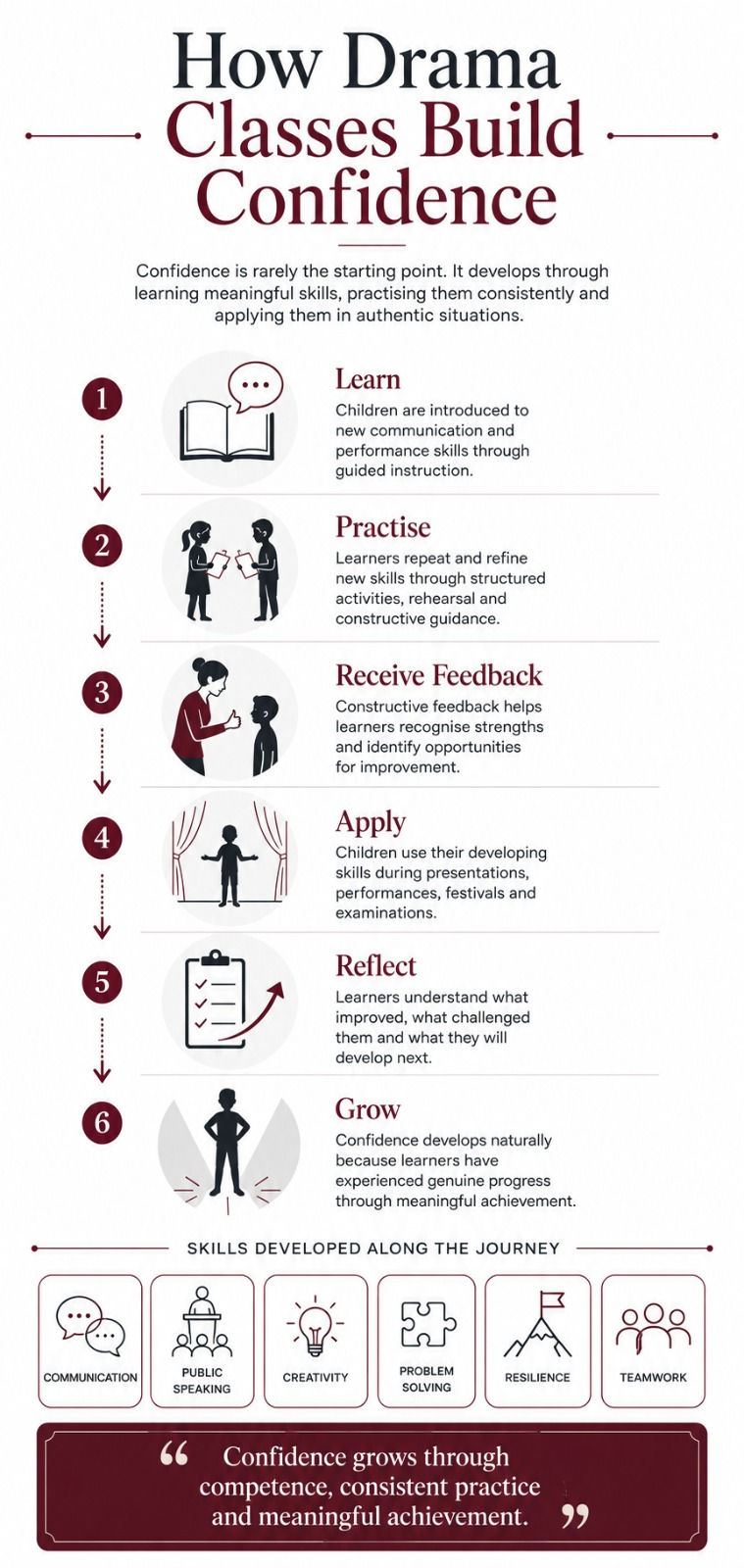
Drama provides regular opportunities to practise speaking, listening, presenting and responding in structured learning environments.
At what age should children begin developing public speaking skills?
Children can begin developing age-appropriate communication skills from an early age through guided activities and structured programmes.
Sources and Further Reading
Self-Efficacy: The Exercise of Control
Self-efficacy: Toward a Unifying Theory of Behavioral Change
Continue Your Parent Resource Journey
Explore our other Parent Resources to learn how structured dramatic arts develops confidence, communication and lifelong skills through meaningful learning.
Ready to learn more about Praxis Academy? Visit our Programme page or contact us to discover how our structured dramatic arts training helps children develop skills that extend far beyond the stage.
Continue Reading
● Can Drama Classes Help a Shy Child?
● What Happens During a Drama Class?
● How Parents Can Support Their Child's Confidence at Home

Comments