
How Drama Classes Can Help a Shy Child: What Parents Should Know

Many parents wonder whether drama classes are the right choice for a shy child.
It is a reasonable question. If a child feels uncomfortable speaking in front of others or prefers to observe rather than participate, placing them in a performance environment may seem intimidating.
The answer is that it depends on the programme.
A well-structured dramatic arts programme should never force children to become someone they are not. Instead, it should help them gradually develop the communication skills, confidence and resilience needed to participate more comfortably in everyday life.
At Praxis Dramatic Arts Academy, we do not see confidence as something that is demanded from learners. We see it as something that develops naturally through meaningful learning, guided practice and genuine achievement.
Shy Does Not Mean Lacking Confidence
Shyness is a personality trait, not a weakness.
Many shy children are thoughtful, observant and highly creative. They often prefer to watch before participating and may need more time to feel comfortable in unfamiliar situations.
Being shy does not mean a child lacks ability.
It simply means they may approach new experiences differently.
A quality drama programme recognises these differences and provides opportunities for gradual development rather than immediate performance.
Children should never feel pressured to become the loudest person in the room.
The goal is to help them become more comfortable expressing themselves when they choose to do so.
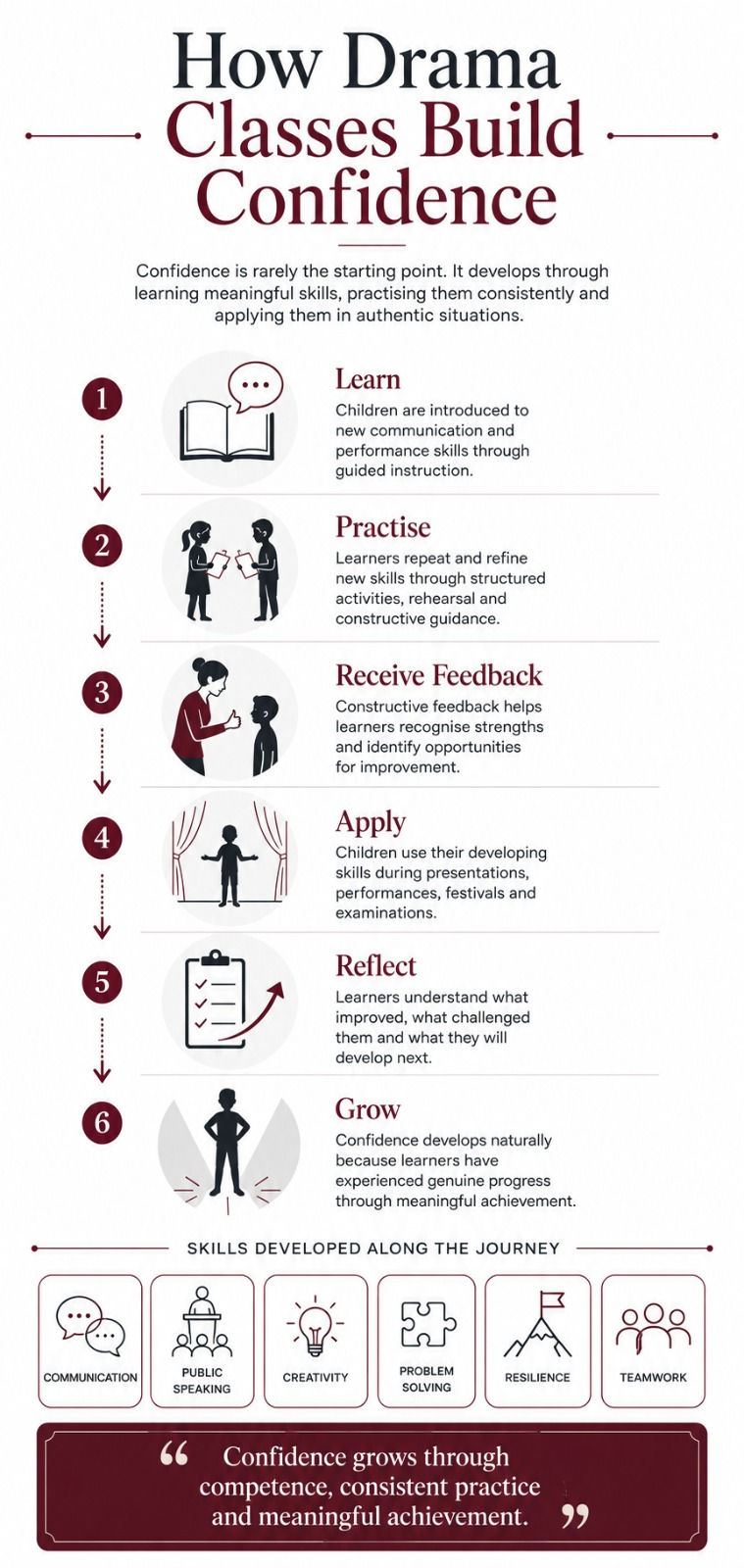
➡ Insert infographic here
Confidence Is Built Gradually
Parents sometimes hope drama classes will quickly transform a shy child into a confident speaker.
Real development rarely happens that way.
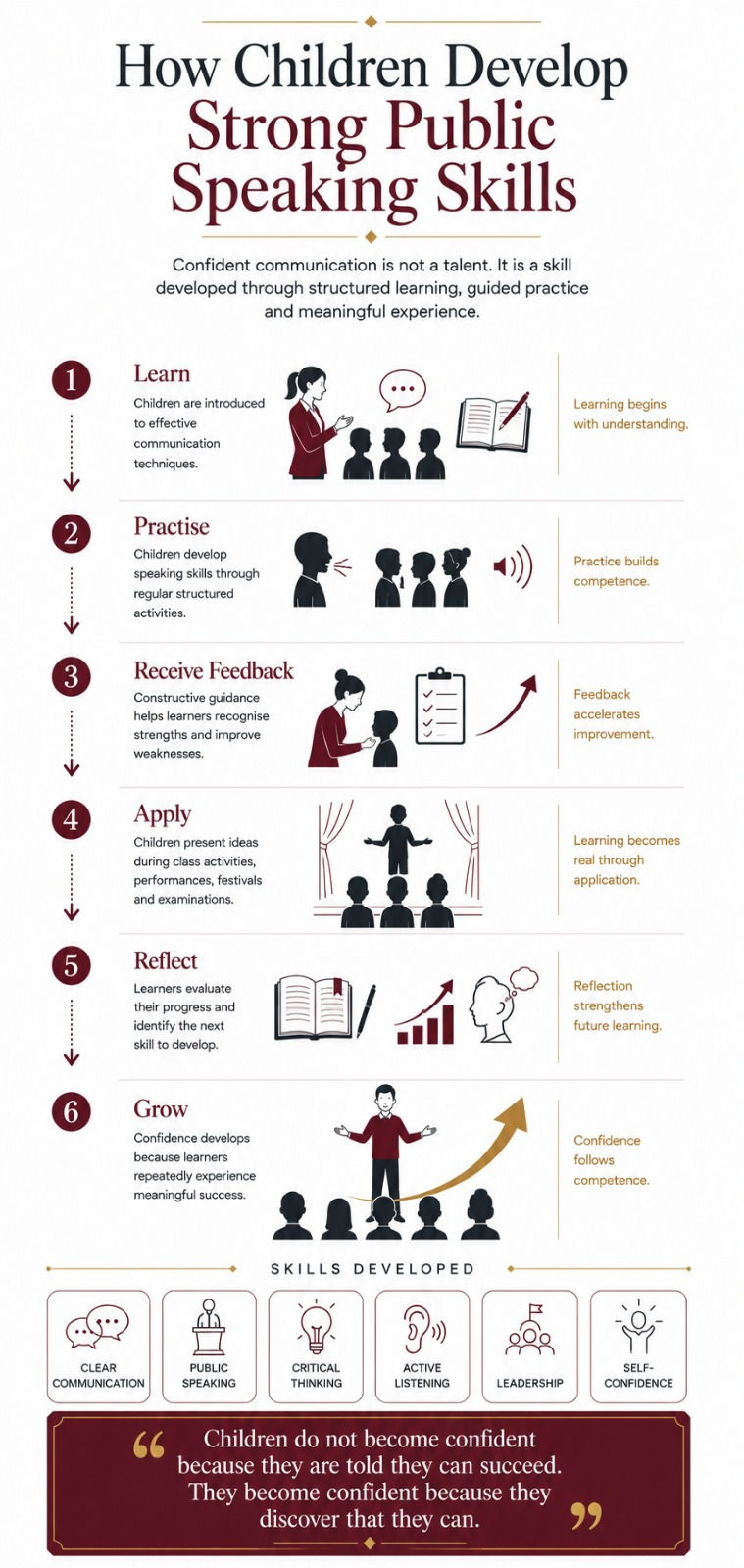
Confidence grows through repeated experiences where children discover they can successfully complete something that once felt difficult.
They learn a new skill.
They practise it.
They receive constructive feedback.
They improve.
Eventually they realise they are capable.
This process develops confidence because children begin trusting their own abilities rather than relying solely on reassurance from others.
Why Structure Matters
Not every drama class produces the same outcomes.
Some programmes focus primarily on performances.
Others provide little progression between activities.
At Praxis, learners follow a structured pathway where each lesson builds upon previous learning. Communication, movement, creativity and performance skills develop progressively, allowing children to experience success without feeling overwhelmed. Meaningful progress remains more important than perfection, and every learner is encouraged to grow from their own starting point.
For shy children, this progression can be particularly important because it allows confidence to develop alongside competence.
Learning in a Safe but Authentic Environment
Children need encouragement.
They also need opportunities to apply what they have learned.
Rather than creating artificial confidence inside a completely protected environment, quality dramatic arts gradually prepares learners for authentic situations.
Presentations.
Performances.
Festivals.
Examinations.
These experiences become extensions of learning rather than isolated events. They allow learners to apply developing skills while continuing to receive guidance and constructive feedback.
Skills That Benefit Everyday Life
Whether or not a child ever performs professionally is largely irrelevant.
The skills developed through structured dramatic arts continue benefiting children throughout school and later life.
These include:
Clear communication.
Public speaking.
Active listening.
Teamwork.
Creative thinking.
Emotional awareness.
Resilience.
Problem solving.
These are transferable skills that support success both inside and outside the classroom.
How Parents Can Support a Shy Child
Parents play an important role in helping children grow.
Avoid comparing your child with others.
Celebrate progress instead of perfection.
Recognise effort as much as achievement.
Allow confidence to develop naturally through experience.
Most importantly, choose a programme that values long-term development rather than quick results.
Final Thoughts
Drama classes cannot change a child's personality.
Nor should they try.
What they can do is help children develop the skills needed to communicate, participate and respond confidently when life presents new opportunities.
At Praxis, we believe confidence is not something children are expected to arrive with.
It is something they gradually build through structured learning, meaningful practice and authentic experience.
That is why many shy learners discover that, over time, they become more comfortable expressing themselves while remaining true to who they are.
Frequently Asked Questions
Should I enroll my shy child in drama classes?
If the programme provides structured teaching, gradual progression and supportive feedback, drama can be an excellent environment for developing communication and confidence.
Will drama change my child's personality?
No. Quality dramatic arts education develops skills, not personalities. Quiet children can become confident communicators without becoming extroverted.
How long does it take to build confidence?
Every child develops at a different pace. Confidence grows through consistent learning, practice and meaningful achievement rather than overnight transformation.
Can drama help with school presentations?
Many learners develop stronger public speaking and communication skills that support classroom presentations and other speaking opportunities.
Sources and Further Reading
Self-Efficacy: The Exercise of Control
Self-efficacy: Toward a Unifying Theory of Behavioral Change
Continue Your Parent Resource Journey
Explore our other Parent Resources to learn more about how structured dramatic arts develop confidence, communication and lifelong skills through meaningful learning.
Ready to learn more about Praxis Academy? Visit our Programme page or contact us to discover how our structured dramatic arts training helps children develop skills that extend far beyond the stage.
Continue Reading
● How Drama Classes Help Children Build Confidence, Communication and Life Skills
● What Happens During a Drama Class?
● How Parents Can Support Their Child's Confidence at Home

Comments